Fenin Foundation Recognizes Healthcare Innovation and Human-Centered Care at a Cinema-Themed Awards Ceremony
.
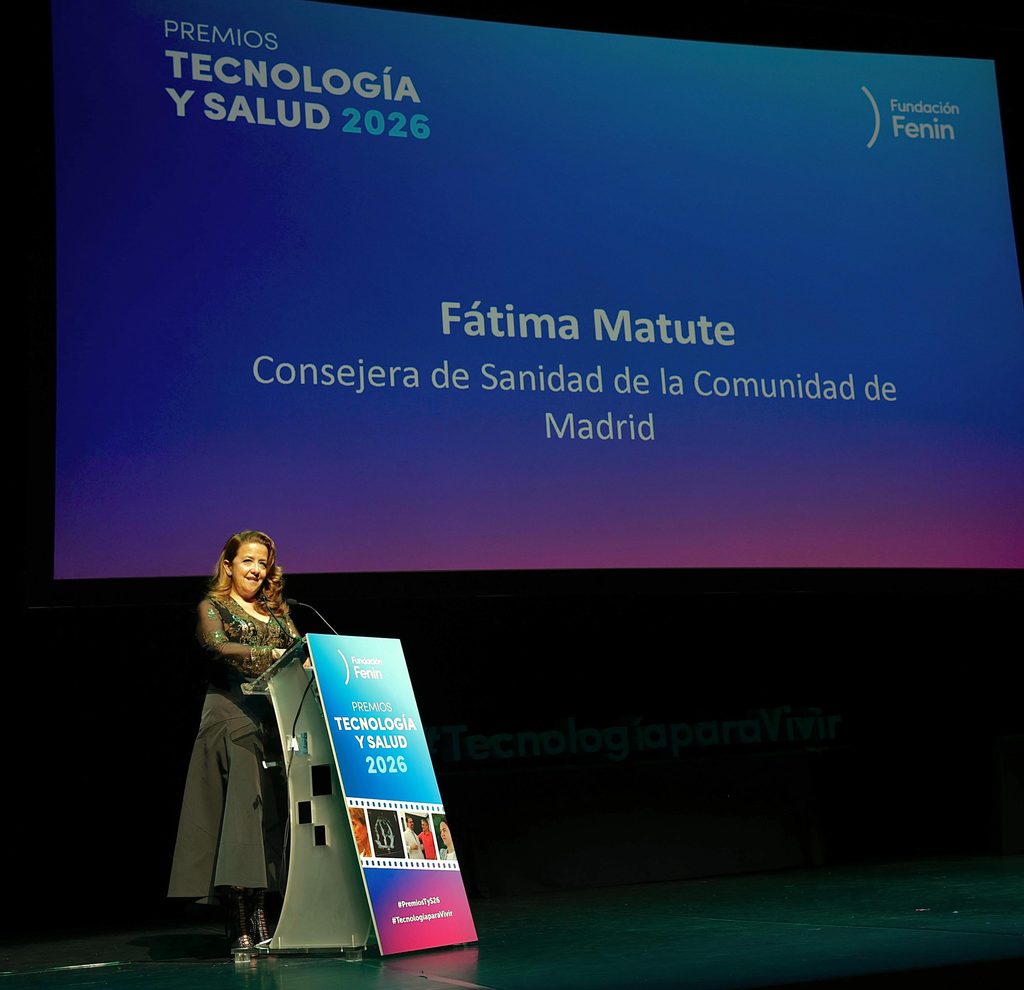
- The annual Technology and Health Awards ceremony was presided over by Madrid’s Regional Minister of Health, Fátima Matute, who highlighted that improvements in the healthcare system occur, among other factors, “when industry transforms scientific knowledge into innovative solutions and when public authorities create a favorable environment for research”.
.
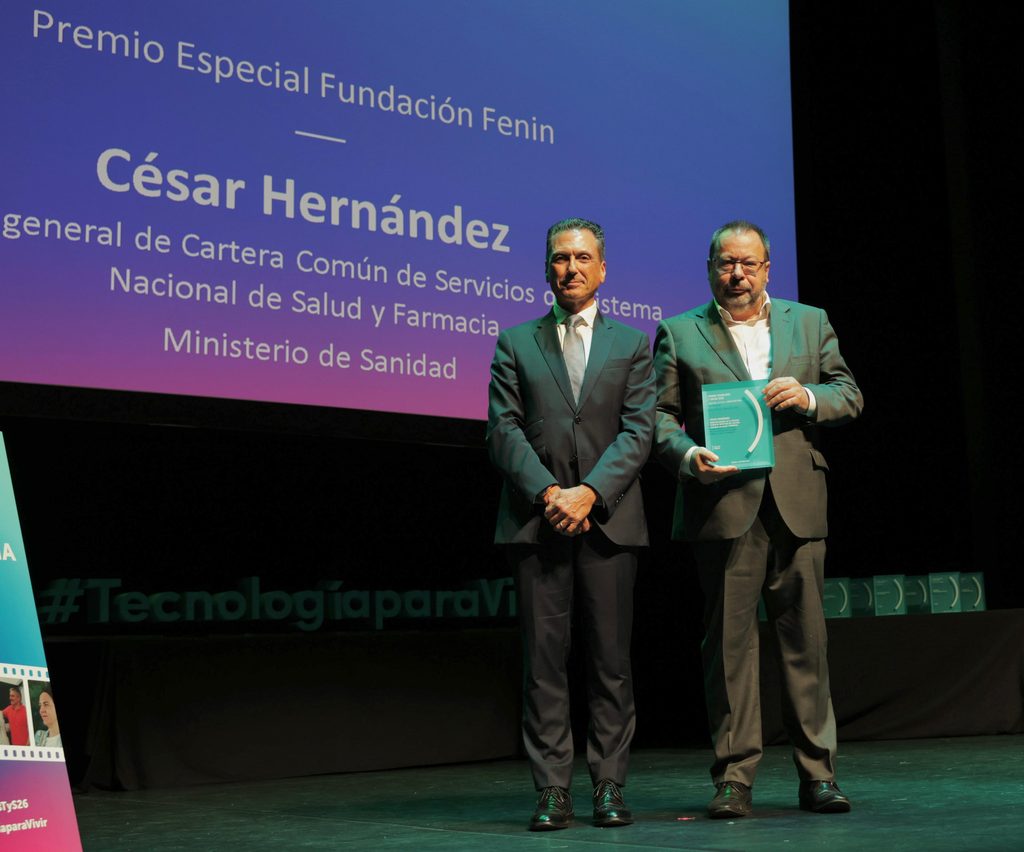
- During the event, known as the “Medical Technology Night”, César Hernández, Director General for the Common Services Portfolio of the National Health System and Pharmacy at the Ministry of Health, was among those honored for his commitment to integrating technological innovation into the healthcare system.
.
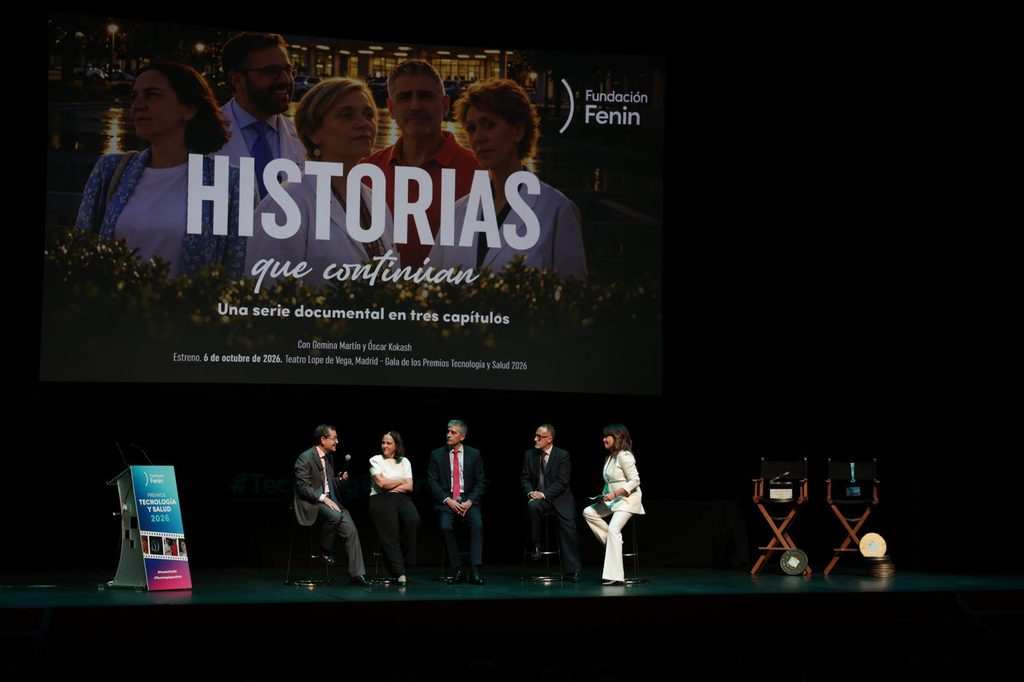
- Madrid’s Lope de Vega Theatre hosted the premiere of Historias que continúan (“Stories That Continue”), a documentary series featuring real-life stories in which medical technology and coordinated healthcare efforts have enabled patients to overcome illness and maintain their quality of life and independence.
.
Madrid, October 6, 2026. – The Fenin Foundation has held a new edition of its annual Technology and Health Awards, widely known as the “Medical Technology Night”. Madrid’s iconic Lope de Vega Theatre hosted the ceremony, which recognizes professionals, institutions, associations and companies whose initiatives and projects, supported by technological innovation, contribute to advancing the healthcare system and promoting more human-centered care.
.
With cinema as the central theme of the evening and more than 400 attendees, the ceremony featured the screening of the documentary miniseries Historias que continúan (“Stories That Continue”), highlighting the importance of innovative medical technology in humanizing healthcare and improving communication with patients. Its three episodes feature real patients sharing their personal experiences of overcoming illness thanks to medical technology and the coordinated efforts of healthcare professionals, industry and public authorities, together with the essential support and care provided by those around them.
.
The ceremony was presided over by Fátima Matute, Regional Minister of Health of the Community of Madrid, who stated: “Innovation does not arise from individual effort, but from bringing together different fields of knowledge and working as a team. Progress is achieved when professionals share knowledge; when healthcare professionals work closely with researchers; when engineers understand existing needs; when industry transforms scientific knowledge into practical solutions; when public authorities create a favorable environment for research by supporting, for example, public-private collaboration; and when patients and their associations participate in defining what they and their families truly need.”
.
.
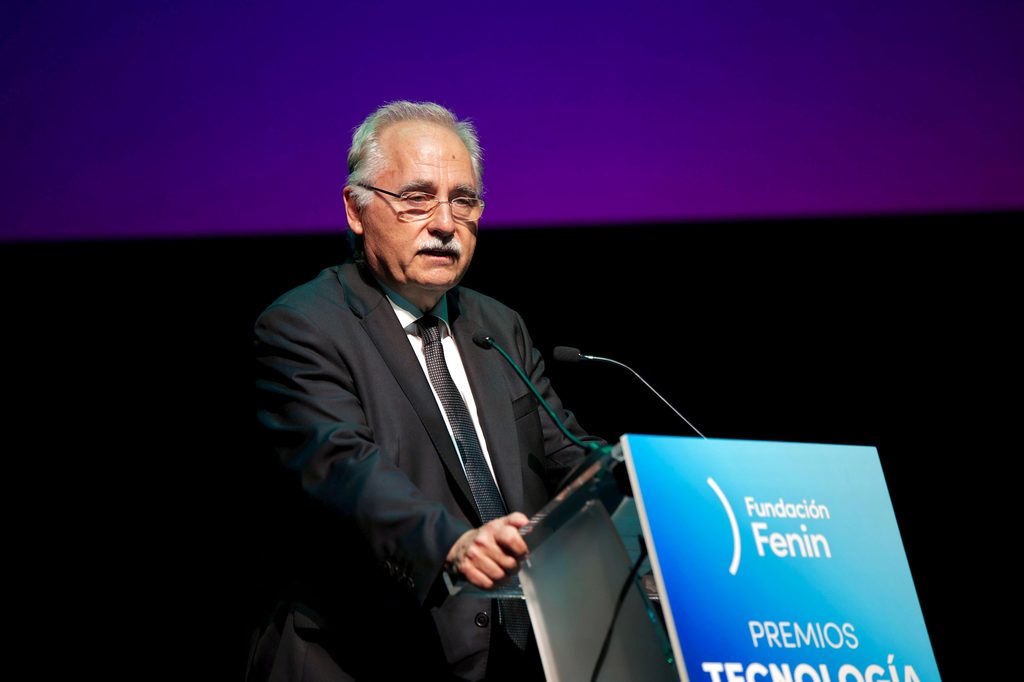
Drawing a parallel with the cinematic theme of the event, Fernando Bandrés, President of the Fenin Foundation, emphasized: “The objectives of the Medical Technology industry and the Fenin Foundation share many similarities with cinema and the performing arts. We work to ensure that healthcare becomes a collective production in which the patient, as the main character, takes center stage. But the patient is never alone. They are surrounded by a cast of professionals who conduct research, provide treatment and deliver care, supported by innovative solutions that improve their health and quality of life,” stated Professor Fernando Bandrés, President of the Fenin Foundation.
.
.
The event also featured César Hernández, Director General for the Common Services Portfolio of the National Health System and Pharmacy at the Ministry of Health, who received the Fenin Foundation Special Award in recognition of his key role in reviewing the healthcare regulatory framework and contributing to the integration of innovation into Spain’s National Health System (SNS).
In his position, he has promoted recent legislative reforms, including the Draft Law on Medicines and Medical Devices, the Royal Decree on Selective Financing of Medical Devices under the Pharmaceutical Benefits Scheme, and the Royal Decree on Health Technology Assessment. These measures address longstanding demands from the sector aimed at improving access to innovation.
.
César Hernández stated: “Spain has a strong, innovative Medical Technology Sector that is essential to the transformation of the National Health System. In recent years, we have promoted major reforms to improve the assessment, financing and inclusion of medical technologies in the healthcare services portfolio.”
.
In addition to César Hernández, other professionals, associations and organizations were recognized for their contributions to more innovative, efficient and human-centered healthcare through the use of medical technologies.
.
Surgical Innovation to Improve Quality of Life
Among the evening’s award recipients was reconstructive surgeon Pedro Cavadas, who received the Healthcare Professional Award in recognition of his clinical work, including surgical procedures that have pushed the boundaries of his specialty, as well as his commitment to humanitarian surgery through his namesake foundation, research and teaching.
Pedro Cavadas has placed surgical innovation at the service of restoring patients’ independence and quality of life, particularly for those most in need.
.
Communication to Guide Healthcare Decisions
La Princesa University Hospital in Madrid has implemented a continuous patient feedback system to incorporate patients’ suggestions into improvement plans, making the voices of people receiving care an integral management tool and an established criterion for improving hospital operations.
The Fenin Foundation recognized this innovative initiative with the Humanization Award, reflecting one of the central themes of the evening.
.
Communication and Independence for People Living with ALS
The ComunicaELA project, developed by the Spanish Association of Amyotrophic Lateral Sclerosis (ADELA), has helped people who have lost their ability to speak due to the progression of amyotrophic lateral sclerosis (ALS) communicate more effectively.
The initiative, which received the Patient Support Award, provides eye-tracking communication devices that transform patients’ eye movements into words, restoring their ability to express their needs and helping preserve their independence.
.
Training Programs for Venipuncture
The Education and Prevention Award was presented to the Caring Around the World Foundation for developing HumaVIA, a low-cost clinical simulator designed for venipuncture training.
The initiative has already trained more than 200 people in Senegal and Peru, helping participants develop their technical skills while improving interactions with patients and reducing the stress associated with the procedure.
.
Artificial Intelligence to Anticipate Risks
The Fenin Foundation presented the Home Care Award in recognition of the integration of the Alexia AISS platform into the healthcare network of ALTHAIA, the University Healthcare Network of Manresa.
The initiative coordinates resources and professionals to provide comprehensive, continuous and personalized care for people living with chronic conditions and high levels of dependency. It also uses artificial intelligence to anticipate risks and improve the quality of care.
.
Research and Innovation to Address Choking Emergencies
Opportunity Health received the Entrepreneurship Award for developing Yarnasa, a device designed to respond to airway obstruction caused by choking.
Its automatic, self-applicable design expands the possibilities for emergency intervention, including allowing affected individuals to use the device themselves in one of the most common and potentially life-threatening emergencies.
.
Continuous Training and Public Awareness in Laboratory Diagnostics
The Training Award was presented to the Spanish Society of Laboratory Medicine (SEMEDLAB) for its ongoing commitment to professional education through accredited courses, seminars and conferences, as well as its efforts to raise public awareness of the essential role of laboratory medicine in diagnosis and patient care.
.
Integrating Engineers into the Healthcare System
Since its establishment in early 2025, the Strategic Commission for Resident Engineers (CEINIR) has worked to promote the integration of engineering professionals into Spain’s National Health System, in response to the increasing presence of technology in healthcare facilities.
Its work has highlighted the need to train engineers to become part of interdisciplinary healthcare teams and respond to the evolving requirements of clinical environments. These efforts earned the commission the Healthcare Model Transformation Award.
.
Charitable Contributions
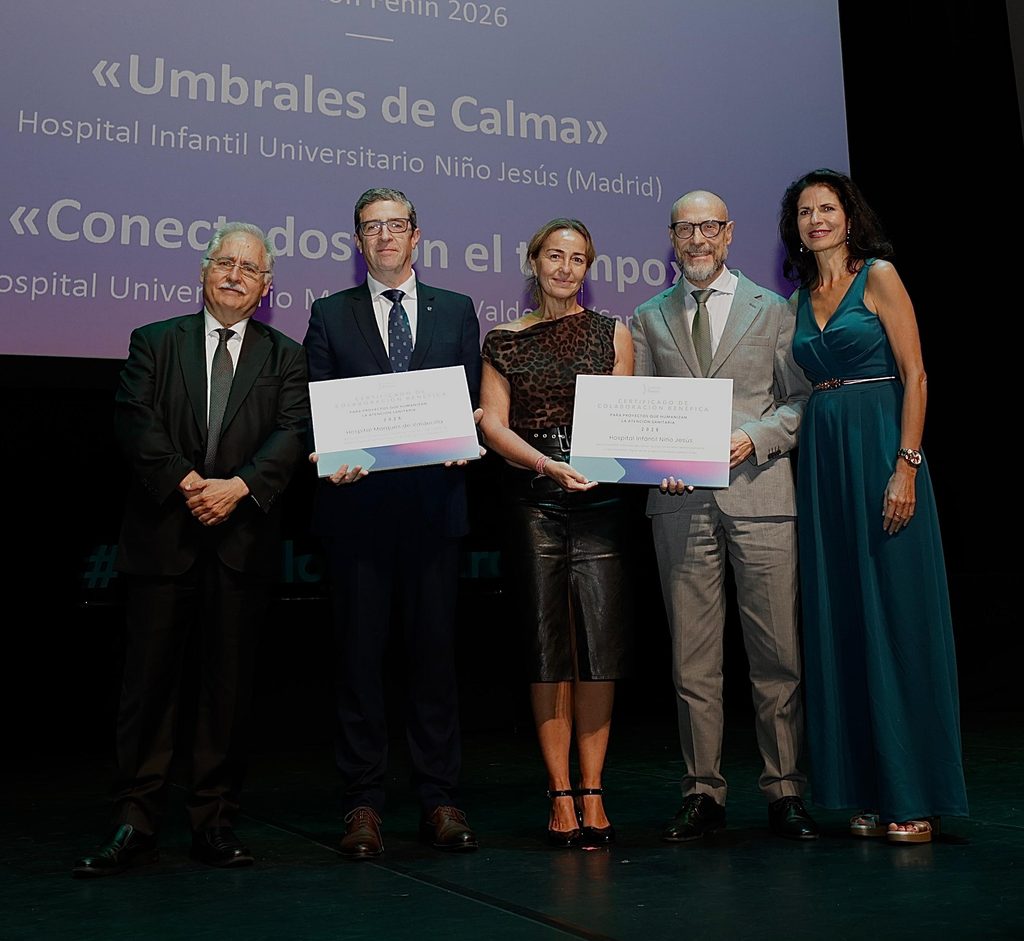
During the ceremony, the Fenin Foundation also announced two projects that will each receive a €40,000 charitable contribution, aimed at humanizing healthcare and improving care for children and older adults.
.
The first contribution will support the Umbrales de Calma (“Thresholds of Calm”) project, which will improve access areas to the Therapy and Blood Collection Departments at Niño Jesús University Children’s Hospital in Madrid.
The project will involve sensory and thermal improvements, together with the digital characterization of entrance areas, to help reduce stress among young patients.
.
The second contribution will support the Conectados con el tiempo: Orientación temporal en el entorno hospitalario (“Connected Through Time: Temporal Orientation in the Hospital Environment”) project, developed by Marqués de Valdecilla Hospital.
The initiative aims to introduce technological devices into hospital rooms to reduce disorientation among patients over the age of 75. It is expected to benefit 600 patients and help reduce acute confusional syndrome, which can interfere with recovery during hospitalization.