
- The event “Contribution of Healthcare Technology to Environmental Sustainability”, organised by the Fenin Foundation in Málaga, brings together managers, healthcare professionals and sector representatives to advance the implementation of more sustainable organisational and care models in hospital settings
- The inclusion of environmental criteria in logistical, investment and clinical decision-making in hospitals, together with the promotion of “green procurement” of healthcare technology, were among the measures highlighted to reduce the ecological footprint and move towards a circular economy.
.
Reducing the environmental impact of the healthcare system has become a priority for the entire health ecosystem. This objective is particularly relevant in hospital settings, due to the significant ecological footprint associated with their operation and the activity carried out in these centres: the energy consumption of their facilities, the use of single-use materials, the generation of clinical waste, and mobility linked to healthcare activity, among others.
.
How can more sustainable organisational and care models be consolidated in hospitals? What success stories are already a reality and could be replicated in other organisations? How can the impact of these environmental strategies be measured? And, specifically, what role does the Healthcare Technology sector and the green procurement of innovation play in achieving this objective?
.
Nearly one hundred managers, healthcare professionals and industry representatives reflected on these issues at the event “Contribution of Healthcare Technology to Environmental Sustainability”, organised by the Fenin Foundation, part of the Spanish Federation of Healthcare Technology Companies, at the Maternal and Children’s Hospital of the Regional University Hospital of Málaga.
.
The event was opened by the hospital’s Managing Director, José Antonio Ortega, who stressed that “environmental sustainability is not an option, but an inherent responsibility in public healthcare management. Hospitals must guarantee the best possible care while minimising our environmental impact, integrating ecological criteria into strategic planning, resource management and daily clinical practice.”
.
He also underlined that “collaboration with the Healthcare Technology industry is key to moving towards more efficient and responsible models. Committing to sustainable innovation and to public procurement that incorporates environmental criteria with real weight in decision-making is essential to building a healthcare system prepared for the challenges of the present and the future.”
.
For her part, Raquel Navarro, Manager of the Fenin Foundation, stated that “the Healthcare Technology industry is committed to respecting the environment throughout the entire production process and life cycle of its products: from the development of more efficient innovative solutions with a lower environmental impact to the management of waste derived from the use of its products. As a complement to this commitment, the Fenin Foundation promotes collaborative initiatives with the healthcare ecosystem, such as this event, to address challenges including decarbonisation and the circular economy. The Healthcare Technology sector can and wants to be a driving force behind this change.”
.
Sustainability in management and clinical practice
In the first session of the event, managers and heads of department analysed the incorporation of environmental sustainability criteria into logistical, investment and clinical decision-making in hospitals, without compromising quality of care or the needs and safety of professionals and patients.
.
With regard to more sustainable operating and management models, examples included the development of energy efficiency plans, such as the renovation of air-conditioning systems and the installation of solar panels, as well as waste management procedures carried out in collaboration with companies. Meanwhile, in the field of care delivery, measures already being applied in areas such as the Clinical Laboratory were presented, together with the replacement of polluting anaesthetic gases with more sustainable alternatives, a practice already referred to as “green anaesthesia”.
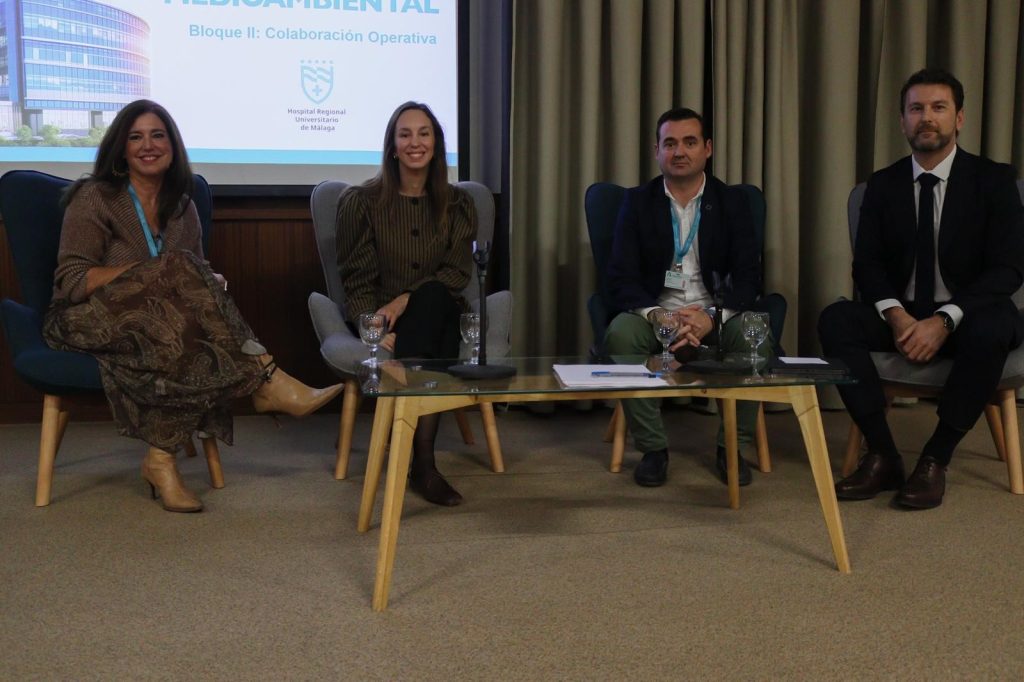
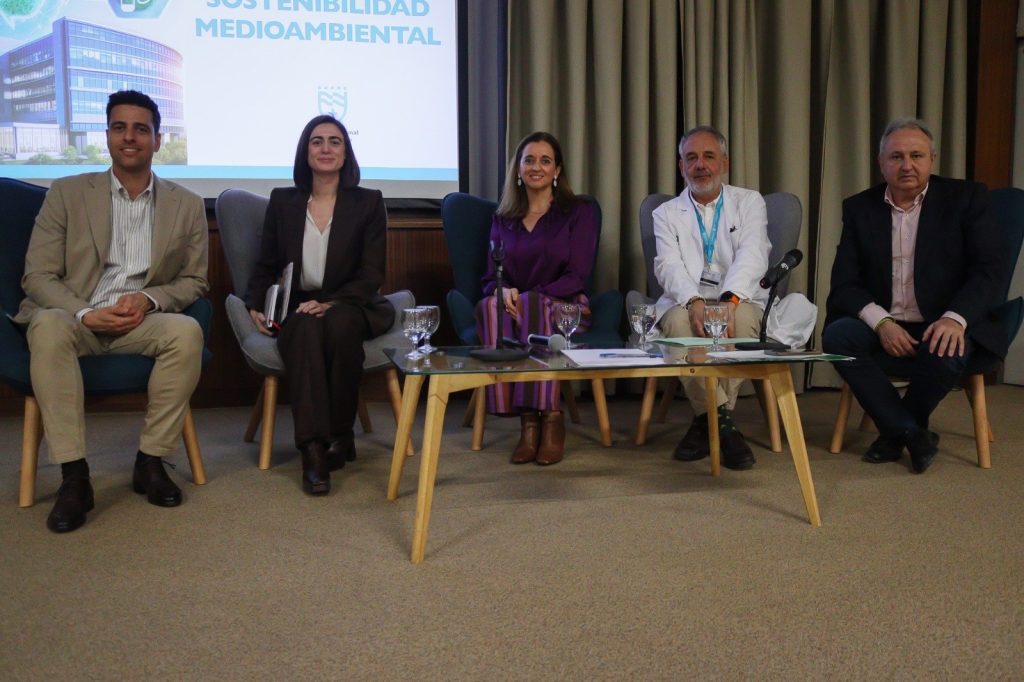
One of the areas where there appears to be the greatest scope for collaboration between industry and hospitals concerns the processes for incorporating technological innovations into these centres. Specifically, this refers to progress towards the standardisation of environmental criteria and their greater weighting in tender specifications, known as the “green procurement” of healthcare technology.
.
The experts noted that, although awareness of the inclusion of these criteria in public tenders has advanced significantly in recent years, inequalities and difficulties are still observed in their practical application within public procurement procedures. The challenge is not only to incorporate these criteria and recognise companies’ efforts in sustainable innovation, but to do so in a way that gives them “real and relevant” weight in the final assessment of bids.