Fenin has conducted the first survey on the real-world use of AI in Spanish hospitals, gathering responses from 216 professionals—including cardiologists, radiologists and healthcare executives—from the Spanish Society of Medical Radiology, the Spanish Society of Cardiology and the Spanish Society of Health Executives.
.
Confidence in AI-enabled devices without CE marking falls to 3.1 out of 10, with consistent results across all medical specialties.
.
A total of 93% of healthcare professionals report that they lack the necessary training to use and properly assess AI in clinical practice.
.
Madrid, 25 May 2026. Spanish healthcare professionals and executives clearly trust artificial intelligence when it carries CE marking and are significantly less confident when it does not. This is the main conclusion of the survey entitled “The Use of AI in Healthcare”, conducted by the Spanish Federation of Healthcare Technology Companies, Fenin, in collaboration with the Spanish Society of Medical Radiology (SERAM), the Spanish Society of Cardiology (SEC) and the Spanish Society of Health Executives (SEDISA).
.
The average confidence score for AI solutions certified with CE marking reaches 7.4 out of 10, with even higher scores among healthcare executives from SEDISA. By contrast, confidence in AI-enabled devices without CE marking falls to 3.1 out of 10. This level of support, in line with the current legal framework, highlights CE marking as a guarantee that AI algorithms are safe, high-quality and effective.
.
“It is very important to see that the vast majority of healthcare professionals and executives understand the value of healthcare regulation. CE marking enables artificial intelligence solutions to be safely adopted within Spain’s National Health System. This study confirms that professionals feel confident when using algorithms that are certified and legally authorised for use. Nevertheless, Fenin will continue working in coordination with the health authorities to ensure that professionals verify that only algorithms compliant with the applicable regulations are used,” said Pablo Crespo, Secretary General of Fenin.
.
Widespread personal use, but insufficient professional training
One of the report’s most striking findings is the gap between the personal use of AI and the lack of training for its professional application. A total of 71% of respondents report using artificial intelligence tools in their daily lives, with ChatGPT as the undisputed leader, followed by Gemini and Copilot, depending on the medical specialty. More than half of respondents, 56%, already use paid versions of these tools. However, 87% believe that they are not sufficiently trained to use these solutions responsibly and efficiently in clinical settings.
.
Awareness of the Medical Device Regulation (MDR) as it applies to AI-based healthcare technology also remains limited, with only 38% of respondents stating that they understand its implications.
.
“Training is essential for the deployment of AI in healthcare. We must work to accelerate the adoption of these new technologies, but we must do so while guaranteeing their responsible use and ensuring that professionals have the necessary skills. Training and regulation must progress at the same pace as innovation,” said Ignacio López, President of Fenin’s Digital Health Sector.
.
In this context, Fenin is developing a free training course that will be accessible to all healthcare professionals and will provide the skills and knowledge required for the safe and effective use of these new technologies, which are expected to transform the healthcare delivery model. A specific guide for healthcare professionals is also being prepared.
.
Only 22% know whether the AI used in their department is certified
As a result of the lack of training, despite the high level of confidence generated by CE marking, the survey reveals a significant gap between professionals’ recognition of its value and their awareness of whether the algorithms they use comply with the applicable regulations. Although 74% of professionals identify CE marking as a guarantee of safety, only 22% can confirm that the AI-enabled devices used in their departments actually hold this certification.
.
Regarding the use of AI, diagnostic imaging is currently the area of medicine in which it is most widely used, with 40% of professionals reporting that they use it.
.
Dr Carlos Escobar Cervantes, a member of the Spanish Society of Cardiology, said:
“Cardiology is one of the specialties in which artificial intelligence is already demonstrating a tangible clinical impact, particularly in risk stratification, diagnostic imaging and the optimisation of healthcare processes. However, for this transformation to be safe and sustainable, it is essential that the algorithms used comply with the current regulations and carry CE marking. The results of this survey clearly show that professionals trust AI when it is certified, while also highlighting the urgent need to strengthen training in this area. At the SEC, we consider it a priority for clinicians to have the robust skills required to assess, interpret and use these tools with scientific rigour and with the appropriate safeguards for patients.”
.
Dr Ángel Morales Lezama, Clinical Head of the Radiology Department at Donostia University Hospital and a member of SERAM, stated:
“For AI to truly transform clinical practice in radiology, we need legal certainty through regulatory compliance, reliability based on comprehensive performance metrics, implementation that is fully integrated into radiologists’ workflows, clear data governance, explicitly assigned responsibilities and validation in local clinical settings. This will allow us to move from isolated pilot projects to routine and safe use. Only in this way will we gain the confidence of both radiologists and patients.”
.
In this regard, José Soto Bonel, President of SEDISA, said:
“AI will not transform healthcare on its own. Healthcare will be transformed by the professionals and executives who are capable of governing AI with purpose, training, ethics, evidence and a patient-centred approach.”
.
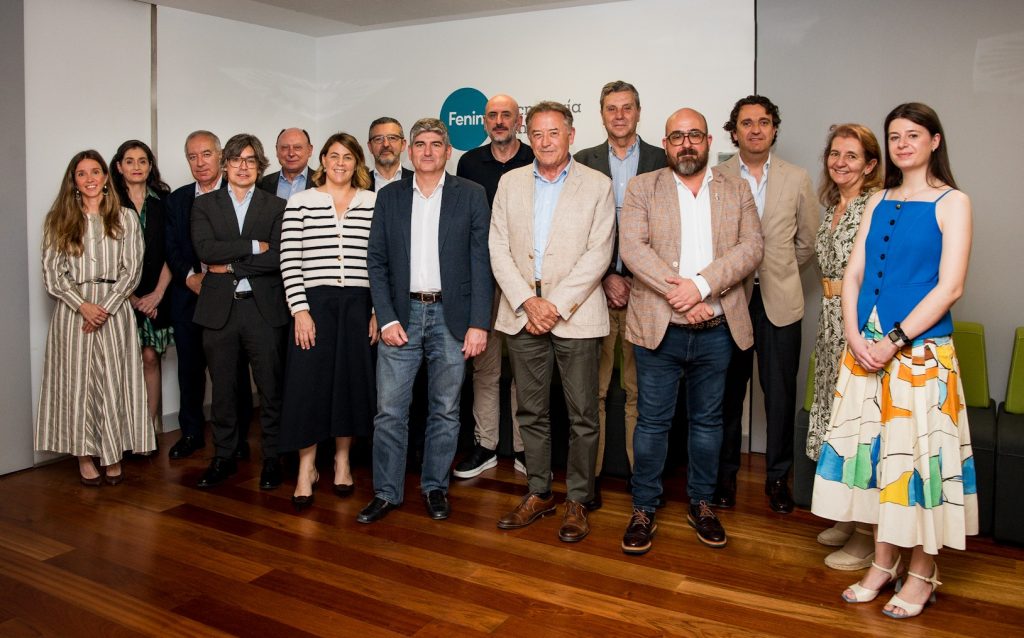
This morning, a think tank session was held as part of the “La tecnología que marca” (“Technology that Makes the Mark”) project. The event provided a forum for dialogue, bringing together participating experts to examine the main challenges and opportunities associated with the application of AI in healthcare.